
Our lab investigates the development, function, and pathology of the human placenta. We aim to understand how the maternal-fetal interface is established and how deviations from normal development lead to obstetric complications.
Research Areas
Trophoblast Retrieval and Isolation of cells in the Cervix (TRIC)
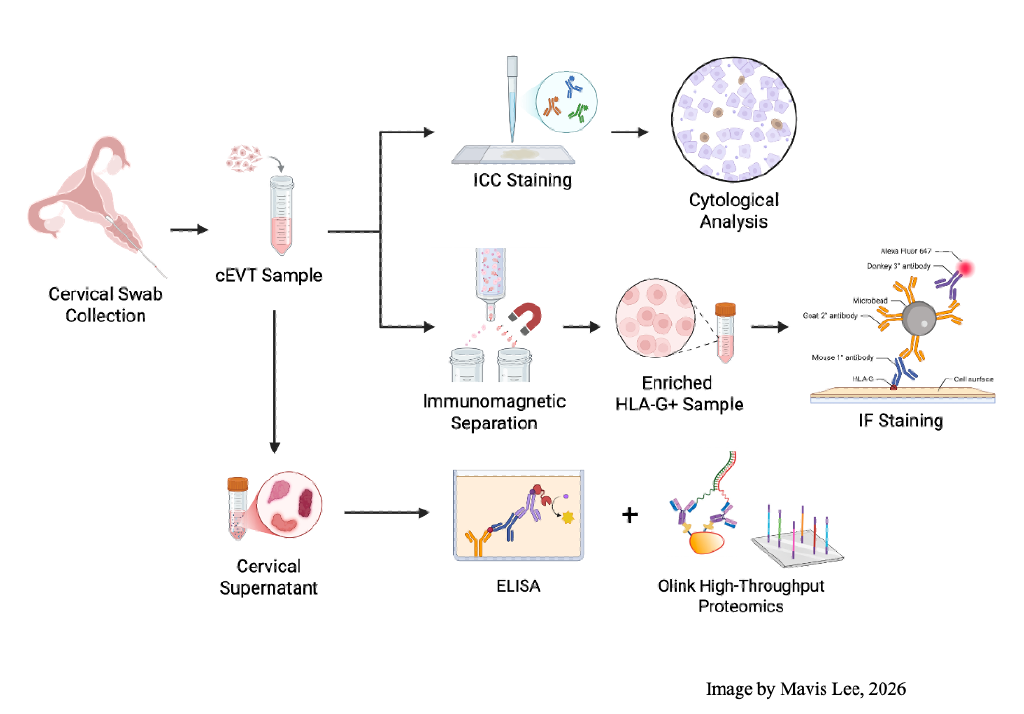
Trophoblast Retrieval and Isolation from the Cervix (TRIC) is the central focus of our research program and serves as a unique platform for investigating placental biology and maternal–fetal interactions throughout pregnancy. By enabling the minimally-invasive collection of extravillous trophoblast (EVT) cells directly from the cervix, TRIC enables us to assess placental health during the earliest stages of gestation, offering unprecedented opportunities to study the molecular mechanisms underlying both healthy and complicated pregnancies.
Through collaborations across multiple clinical and research sites, we have established standardized TRIC collection and processing protocols that facilitate the recruitment of diverse patient populations and the generation of robust, translational datasets. This multi-site approach allows us to bridge fundamental placental biology with clinically relevant questions, accelerating the discovery of biomarkers and pathways associated with conditions such as preeclampsia, fetal growth restriction, preterm birth, and other adverse pregnancy outcomes.
Building on this foundation, our research integrates advanced genomic technologies to characterize trophoblast biology at increasing resolution. Current and future directions include the application of spatial transcriptomics to map gene expression patterns within the maternal–fetal interface and whole-genome sequencing to investigate genetic and epigenetic factors influencing placental development and function. Together, these approaches position TRIC as a powerful tool for advancing precision medicine in obstetrics and translating molecular discoveries into improved prenatal care.